

After someone important to you dies, you may look for something that helps explain what you are feeling. You might search for answers, listen to other people’s experiences, or wonder whether your grief is “normal.”
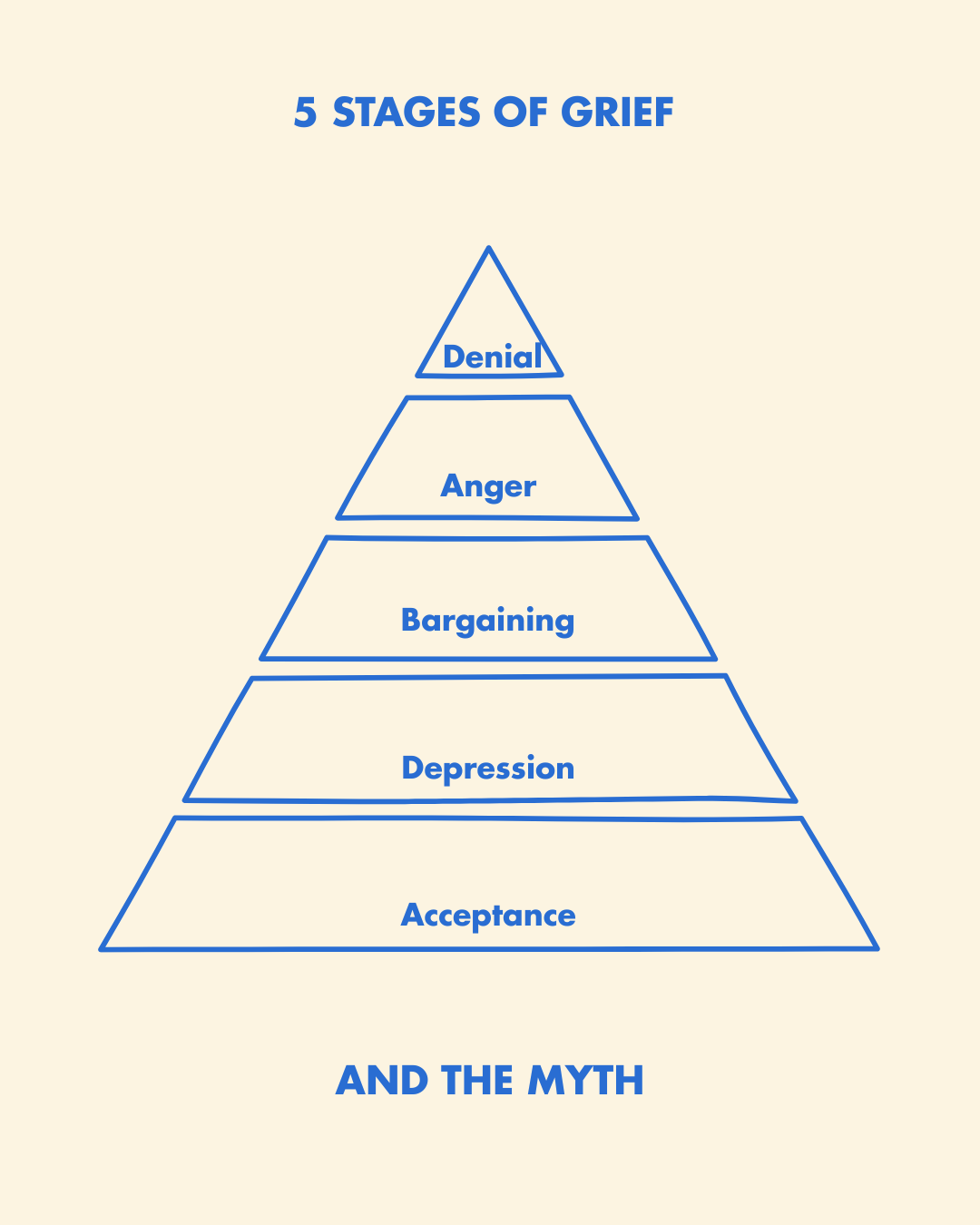
During that search, you will likely come across the five stages of grief: denial, anger, bargaining, depression, and acceptance. These words can offer language for difficult experiences. But they can also create the impression that grief follows a predictable, linear path.
The myth is that everyone must experience these five stages, in order, before their grief is complete. However, grief is more personal and complex than a checklist.
What Are the Five Stages of Grief?
Psychiatrist Elisabeth Kübler-Ross introduced the model in her 1969 book, On Death and Dying, drawing from her work with people facing their own deaths. The model was later applied to people grieving the death of someone important to them.
Our earlier Kate’s Club post about the five stages of grief explored this framework and acknowledged that people may skip or revisit experiences. Understanding its limitations can help us make more room for each person’s grief.
Here is what the five terms often describe:
Denial
Denial can involve difficulty taking in the reality of a death. You may know that someone has died while still finding it hard to believe they will not answer your next call or walk through the door.
Anger
Feeling angry while grieving may involve frustration, blame, or a sense that what happened is unfair. It can be directed toward yourself, other people, the person who died, or the circumstances surrounding their death.
Bargaining
Bargaining often involves “what if” or “if only” thoughts. You might replay events and imagine how a different decision could have changed the outcome. Having these thoughts does not mean you were responsible for the death or could have prevented it.
Depression
Within the model, depression refers to deep sadness associated with loss. This may include feeling withdrawn or having difficulty finding energy or interest in everyday activities. The model’s use of this term is different from a diagnosis of major depressive disorder.
Acceptance
Acceptance can describe acknowledging the reality of the death and learning to live with that reality. It does not mean approving of what happened, forgetting the person, or never feeling sadness again.
These descriptions may resonate with you. You do not have to experience all of them for your grief to be valid.
Why Is the Five Stages of Grief Model Considered a Myth?
The problem arises when a description becomes an expectation.
Grief is not something that follows a set schedule or order. One day, you might feel like you are adjusting to life without someone important to you, and the next day, a familiar song, holiday, or memory might bring back feelings you thought you had already worked through. That does not mean you are moving backward. It is simply part of how grief can change over time.
At Kate’s Club, we recognize that every person's experience with grief is different. The five stages may help some people put words to their feelings, but they cannot explain everything someone experiences after a death. There is no required order to follow and no deadline for reaching acceptance.
You do not need to feel angry before you feel sad. You do not need to experience bargaining. Recognizing the reality of a death does not prevent you from feeling disbelief again.
How Can the Myth Affect Someone Who Is Grieving?
When grief is presented as a series of steps, people may begin measuring themselves against them.
You might wonder, “Why haven’t I reached acceptance?” or “I never felt angry. Did I miss something?”
Thinking about grief this way can create unnecessary pressure. Someone might feel like they are taking too long to grieve or that they should be feeling better by a certain point. Others may question their feelings because their experience does not match what they have read about the five stages.
Grief can also include emotions that are not part of the model, such as guilt, loneliness, relief, or longing for the person who died. These feelings can come and go, sometimes when you least expect them. Rather than focusing on whether someone is grieving the right way, it is important to recognize that their feelings and experiences are their own.
Finding comfort in the five terms is okay. Feeling that they do not describe your experience is okay, too. They cannot capture everything about your relationship with the person who died or what their absence means in your life.
How Can We Support Someone Without Focusing on Stages?
Start with curiosity about the person’s experience. Instead of asking which stage they are in, consider these supportive things to say to someone who is grieving:
- “How are you feeling—really?”
- “Would you like to talk about it? I’m listening.”
- “Please know that I’m here for you.”
Listen without assigning a label or deciding what they should feel next. Someone may want to share memories, spend time together, or have space. Let their answer guide the conversation.
Looking for Free Grief Support in Georgia?
Families seeking free grief support and grief resources can turn to Kate’s Club for community-based peer support after the death of someone important to them.
Our programs create supportive spaces for children and teens, young adults, and parents and caregivers. Through recreational activities, guided group conversations, and peer connection, participants can express their feelings, share memories, and build relationships with others who understand grief.
Founded in Metro Atlanta in 2003, Kate’s Club serves communities throughout Metro Atlanta, Southwest Georgia, Northeast Georgia, and Coastal Georgia. Our free programs focus on peer support rather than clinical counseling or individual therapy.
Grief does not follow a checklist, and you do not need to reach a particular stage to find support. Wherever you are in your grief, Kate’s Club offers a community where it is okay to grieve.