

Some of Jordan’s favorite memories with her dad are the evenings they spent playing gin rummy while Dateline or a game show played on television.
“Some nights I did not want to play gin rummy with him…Now I look back and I’m so glad that I played all of those games with him,” Jordan said.
She still has the book where they recorded nearly 150 games. They started playing when she was in middle school. Her dad was usually the better player, but the scores now matter less than the time they shared.
Jordan was 26 when her dad died from esophageal cancer in May 2025. Losing a parent in her 20s meant navigating work, relationships, and a future she always imagined he would be part of. Through sharing her story and connecting with others at Kate’s Club, she has found room to talk about both her grief and the dad she loves.

Grieving While Building an Adult Life
Jordan’s dad was diagnosed in spring 2023, when she was 24. Although the diagnosis was terminal, the next two years gave their family more time together.
Before the diagnosis, Jordan could hear in her mother’s voice that something was wrong. She told a friend, “I think my dad has cancer,” before speaking with him and having her fear confirmed.
That same week, her workplace laid off several employees. Jordan was already worried about her job when her family received news that changed their lives.
“It really put into perspective what matters,” Jordan said.
About a week after her dad died, Jordan started a new job. The funeral had not yet taken place, and she did not know how to explain her loss to new colleagues.
“It was kind of the opportunity to just be removed from my own situation in this new environment,” Jordan said.
The job gave her temporary distance from her grief, but it also required her to decide who should know and when she felt ready to share.
Her friendships brought similar uncertainty. None of Jordan’s close friends had lost a parent. They cared and tried to help, but they did not always know what to say.
“I didn’t know what I needed, and I still, to this day, am not exactly sure what I need from people in terms of grief,” Jordan said.
Her experience reflects the challenges of navigating friendships while grieving. The people who helped most listened, made plans with her, and continued showing up.
Missing a Parent in the Future You Imagined
Losing her dad changed how Jordan pictures getting married, buying a house, and having children. Her dad had talked about walking her down the aisle and becoming a grandfather.
“I will always save a seat for him,” Jordan said, recalling what she shared at his funeral.
Because his work as a pilot often took him away, Jordan’s family sometimes still feels as though he is on a long trip. Accepting that she will never be able to call, text, or hug him again remains one of the hardest parts of her grief.
Finding Ways to Carry Grief
Watching her dad approach the end of his life before enjoying retirement made Jordan reconsider what she kept postponing. A few months after his diagnosis, she booked a solo trip to Ireland and Scotland. That trip began a love of travel that has taken her to around 10 countries.
Traveling has helped Jordan build confidence, but those experiences still carry grief. She can enjoy a trip while wishing she could send her dad photos. Movies, family, and friends have also become healthy ways for her to cope with grief as a young adult.
Finding Grief Support for Young Adults at Kate’s Club LoKate
Jordan wanted to meet people who understood parent loss, which led her to LoKate, Kate’s Club’s program offering grief support for young adults.
“I definitely felt a lot less alone in my grief,” Jordan said of her first virtual meeting.
She has attended virtual and in-person meetings, outings, and coffee gatherings. Some meetings focus directly on grief, while the coffee gatherings offer space to connect and discuss everyday life.
A rage room outing gave Jordan an opportunity to release frustration alongside people who understood why she was there. She encourages anyone who feels unsure to attend one meeting and see how it feels.

Keeping Her Dad Part of Her Life
Jordan wants people to ask about her dad. Sharing stories helps others understand who he was and how he shaped her life.
“I think that’s the best way to keep somebody’s memory alive,” Jordan said.
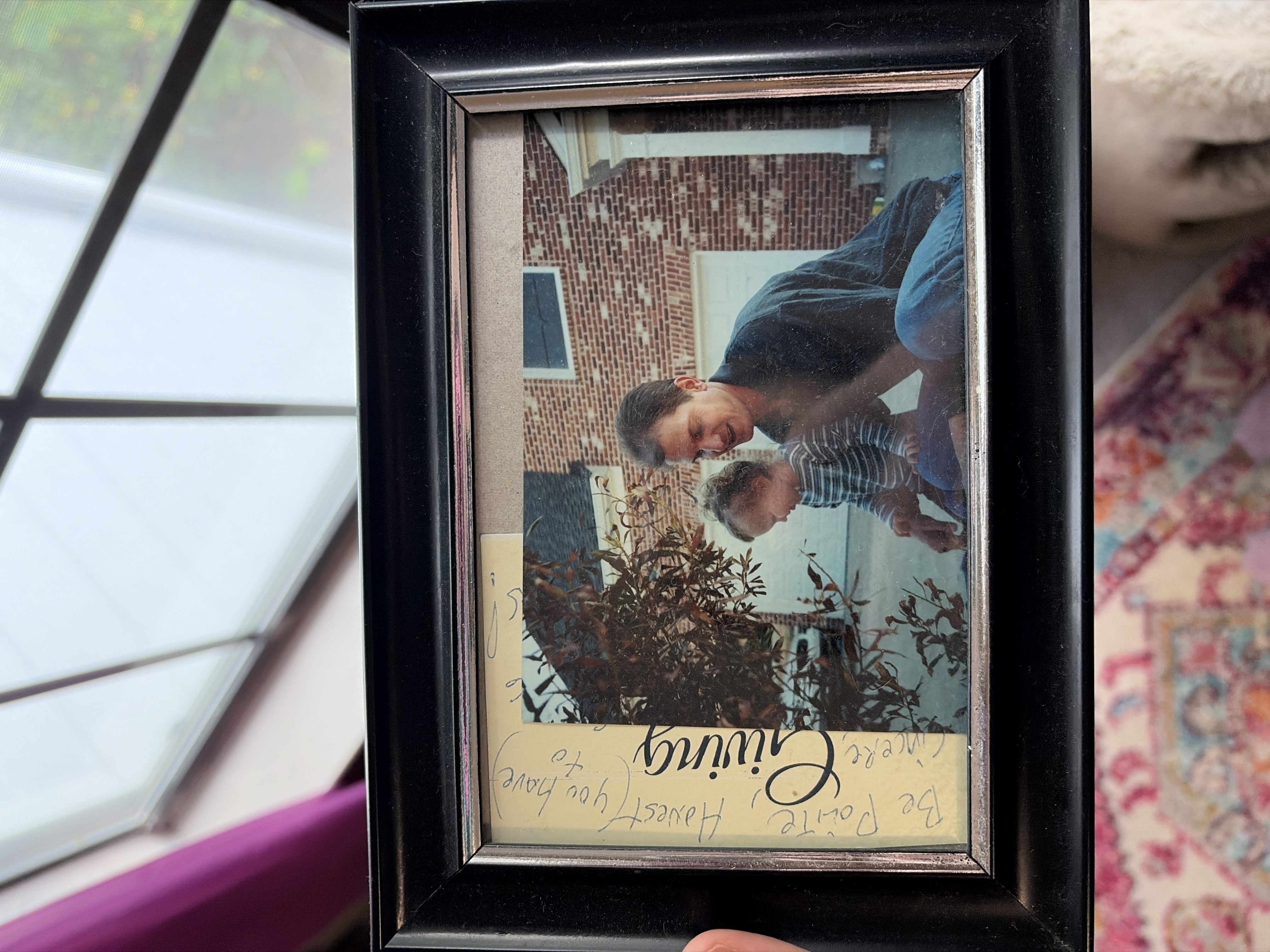
She keeps his cards and has framed a childhood photo beside a note he left on her car seat. She also remembers his lessons by caring for herself and living in ways that would make him proud.
“I want him to live on within my actions,” Jordan said.
The gin rummy book holds another part of their relationship. She has not played since his death, but its pages help her remember their evenings together.
Looking for Grief Counseling or Grief Support Near You?
Kate’s Club is a peer-support program, not clinical counseling or individual therapy. Young adults searching for grief counseling or grief support nearby can turn to Kate’s Club for free, community-based programs.
Kate’s Club creates supportive spaces for children and teens, young adults, and families navigating life after the death of someone important. Through activities, guided group conversations, education, and peer connection, participants can develop healthy coping skills, express difficult emotions, and meet others who understand grief. Those seeking individual counseling can contact Kate’s Club for referrals to grief-informed therapists.
Founded in Metro Atlanta in 2003, Kate’s Club now serves communities throughout Metro Atlanta, Southwest Georgia, Northeast Georgia, and Coastal Georgia.